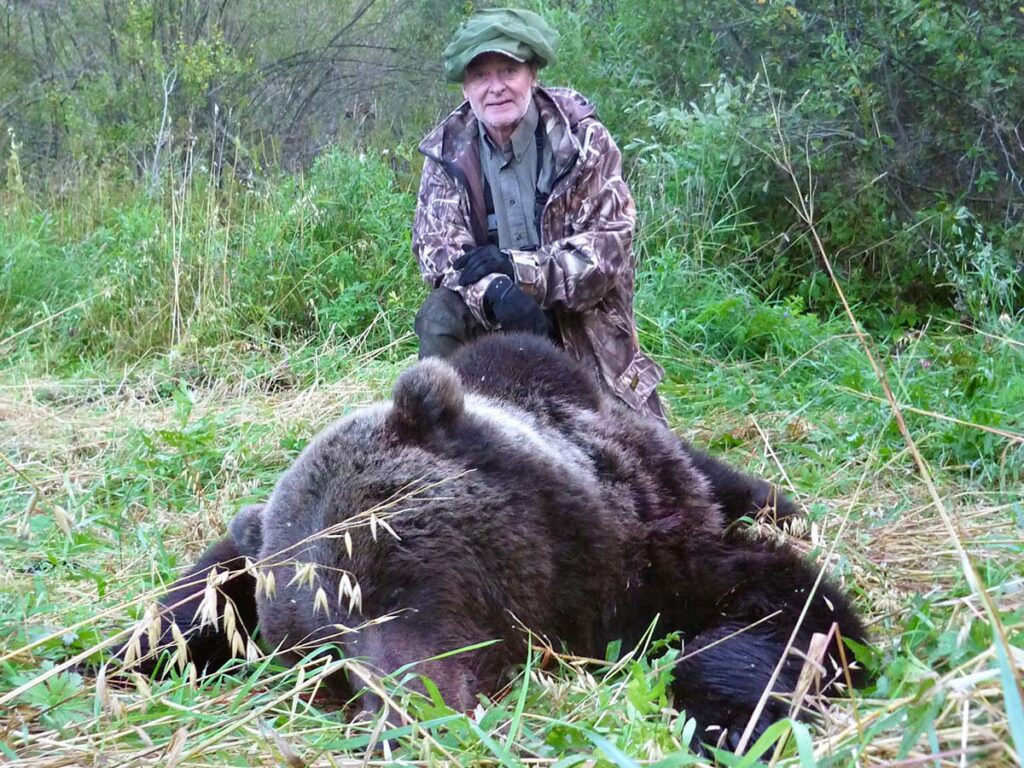
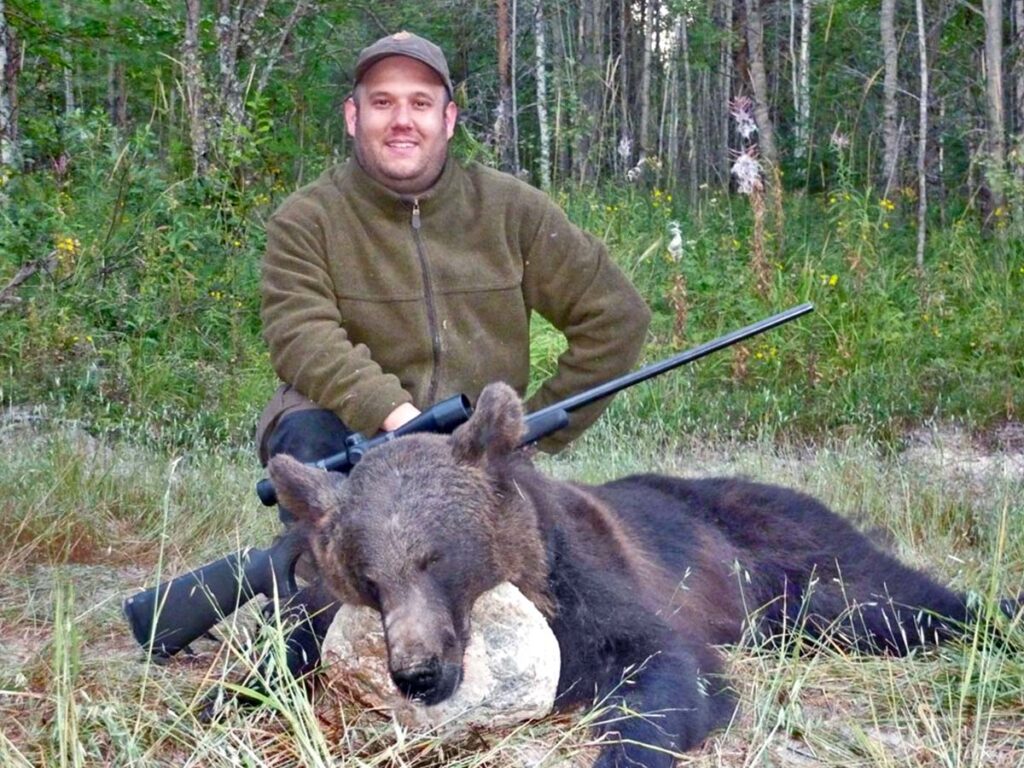
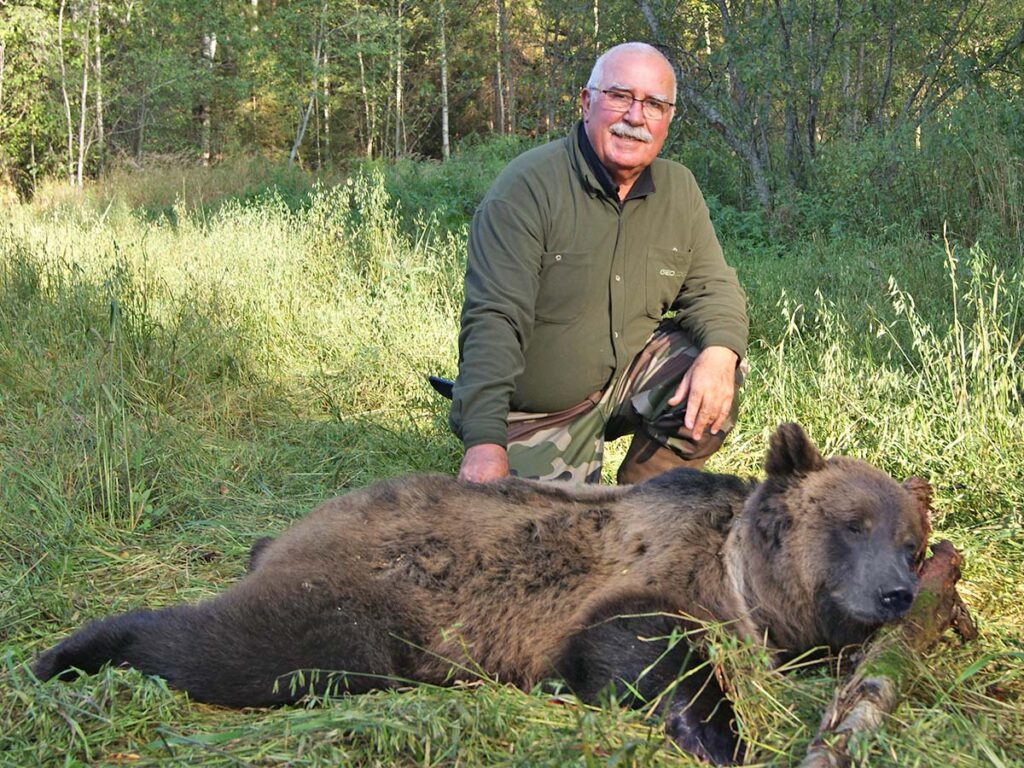
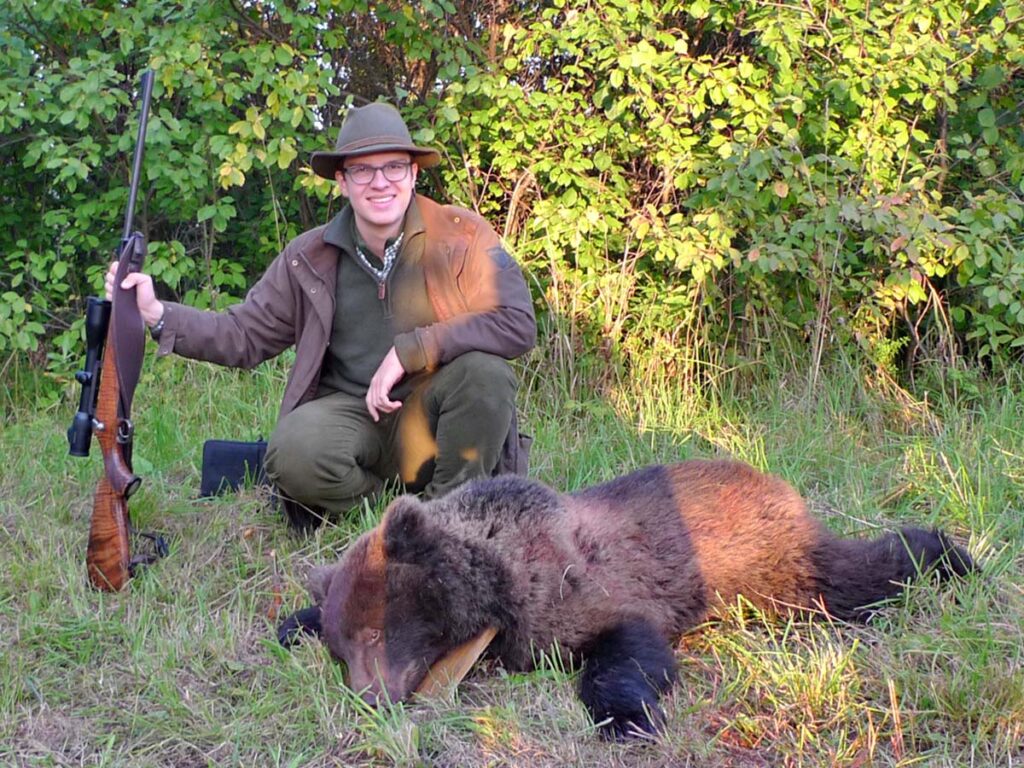
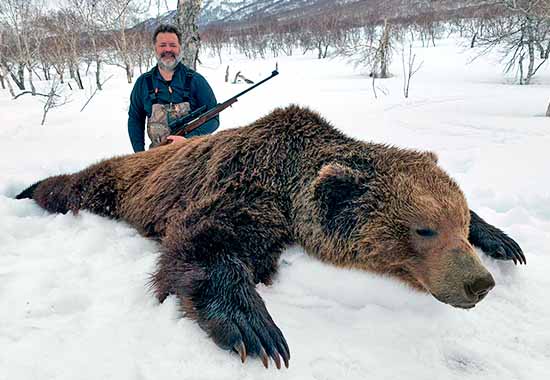
European Brown Bear in Russia

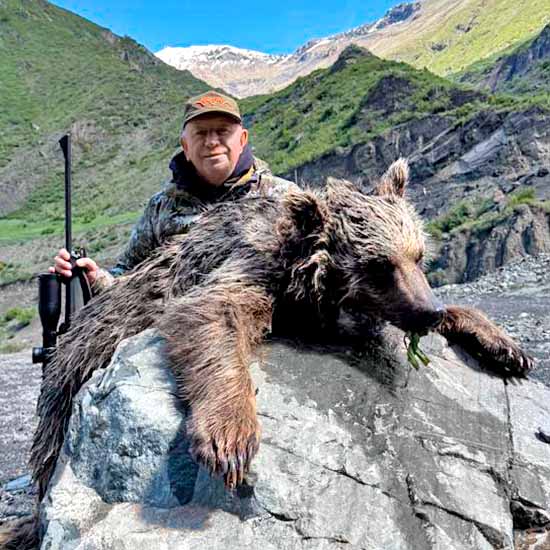
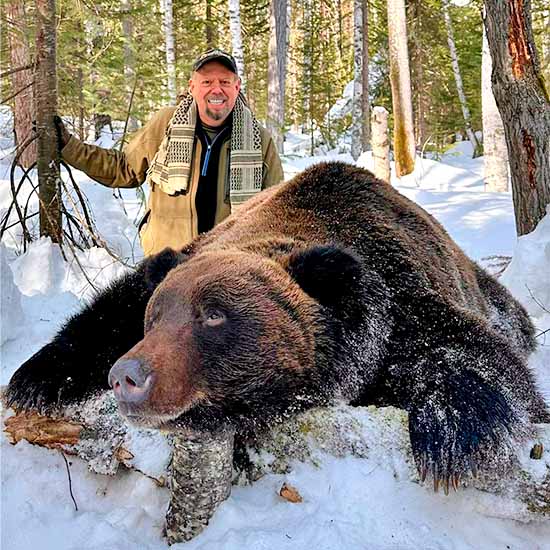
The European brown bear is smaller than the Kamchatka brown bear, but remains a highly regarded trophy species.
This subspecies is characterized by a relatively large skull structure and darker, more curved claws. While smaller in body mass, it is still a strong and challenging game animal in managed hunting areas.
Typical weights range from 150–170 kg, with exceptional individuals reaching up to 300 kg.
With over 35 years of our guiding experience, clients have achieved an average success rate of around 90% in this hunting program.
● Consistent high success rate
Well-managed hunting areas provide excellent opportunities for mature bears.
● A traditional European hunting setting
Combination of agricultural fields and forest edges creates predictable bear activity patterns.
• A logistically accessible and well-organized hunt
Compared to remote Siberian or Far East hunts, this program is logistically easier and less physically demanding.
● Favorable hunting conditions
Use of elevated observation platforms allows controlled and efficient hunting.
● Proven long-term experience
Over three decades of successful guided hunts with Russian and foreign hunters.

After arrival in Moscow, you will be met by our crew and assisted with customs and firearm formalities.
From Moscow, you will travel to Kirov the same evening. The journey by train is an experience in itself, passing through the Russian countryside and offering a glimpse of the vast landscapes along the route often associated with the Trans-Siberian railway system.

● August – September
Group Size
● 1–2 hunters

European brown bear hunting is typically conducted in agricultural regions where bears actively feed on oat fields from mid-August through early autumn.
Bear activity is influenced by natural food sources such as berries and nuts, which determine movement patterns throughout the season.
Evening hunts are usually conducted from elevated observation platforms overlooking active feeding fields. Hunters glass the area and wait for bears to appear at dusk.
Morning hunts are typically more active and may include controlled spot-and-stalk approaches when conditions allow.
This is generally considered a less physically demanding hunt, with a strong emphasis on observation and timing.

Comfortable hunting houses equipped with all necessary facilities for a safe and convenient stay.
While simple in design, camps offer warmth, food, and reliable service throughout the hunting period.

● Daytime: +15°C to +20°C
● Nighttime: 0°C to +10°C
Weather conditions during the season are generally stable, with cool mornings and evenings and mild daytime temperatures.